Making Compost
- stu14089
- May 4, 2016
- 3 min read

Compost is ideal for increasing the humus content in your garden's soil, as well as making organic matter bioavailable for the plants in your garden to use. In the documentary One Man, One Cow, One Planet, Peter Proctor says that "25% of rubbish in landfills could have been used in compost," showing that compost is a much more sustainable way for us to be using our plant and food waste.
In the Elements of Nature, Gardener's know how, Good Compost Making fold out (pictured above) they say that "Nutrients are best introduced through compost. Compost heaps provide a controlled environment in which microbial activity occurs much more rapidly than it does in the soil. In these heaps, soil organisms break down plant and vegetable matter into dark brown material called humus. Compost turns garden and household waste into a valuable conditioner which improves the physical properties and fertility of the soil, resulting in greater vitality and better yields."
When building a compost heap, you are building with nitrogen and carbon, with a ration of 24 carbon : 1 Nitrogen, you must also have water all the way through the heap. Compost is best made on the descending moon, as this is an earthly task, as it is for the soil and requires the work of worms. The shape of the compost heap is also very important and all material sticking out of the heap must be woven back in, this allows the compost heap to have a clear outer sheath, as well as the idea that the inside will look after the outside if the whole heap is woven together. To have an effective compost heap, it should be no wider than 1.2m, but the heap can be as long as you would like. Compost heaps should not be a pile, but instead more of a stack of different layers which are all roughly the same size and thickness.
"ANYTHING THAT WAS ONCE LIVING CAN BE COMPOSTED."
What you will need:
seaweed
cow poo
organic coffee grounds
grass clippings
kitchen waste - micro organisms
calcium - limes
silica - sand
blood and bone or dead animal (not killed by poison)
Dry leaves
Pine needles
Sources of carbon:
Dry leaves
pine needles
dry grass/hay (organic)
Sources of nitrogen:
Cow poo
Seaweed
Green material (grass clippings, trimmings from pruning - you will need to chop big bits up)
Kitchen waste
Sources of Silica:
Sand
Rock dust (have some at home thanks to Des Matheson from Eco-Organics)
Diatomaceous earth


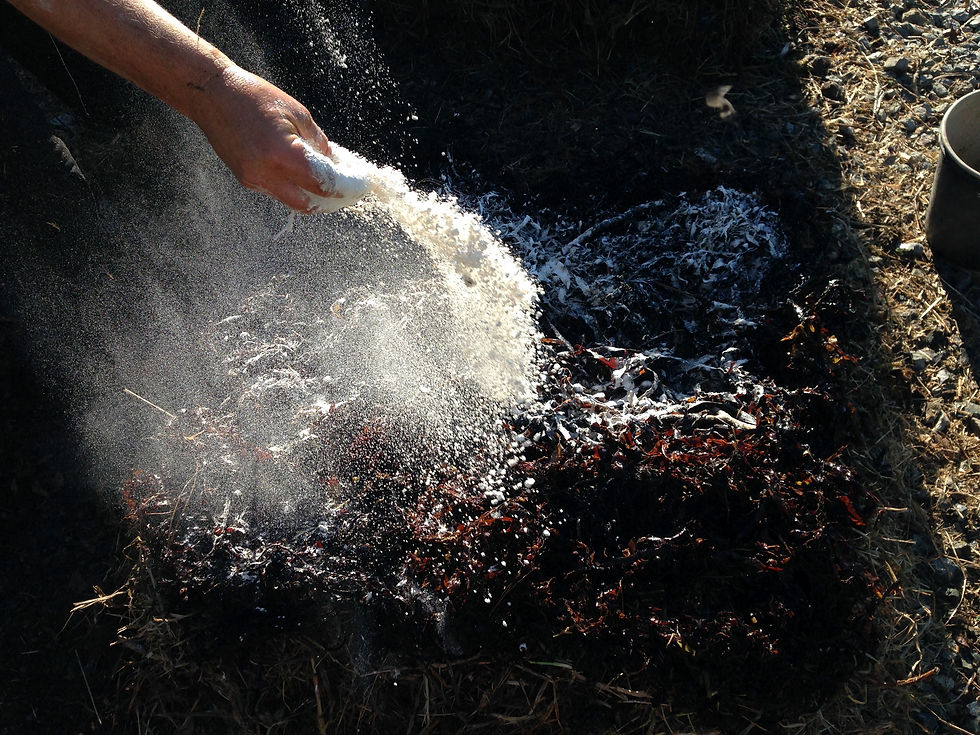





Limes - We used Gypsum Clay Breaker
Layers that we used (in order) at the Maunga Kereru workshop (may have missed a few layers, but the trend is there).
Dry leaves - carbon (absorbs and is static)
teepees of sticks to allow airflow
moisten/soak the dry leaves
liberal sprinkling of lime
sand
dry grass
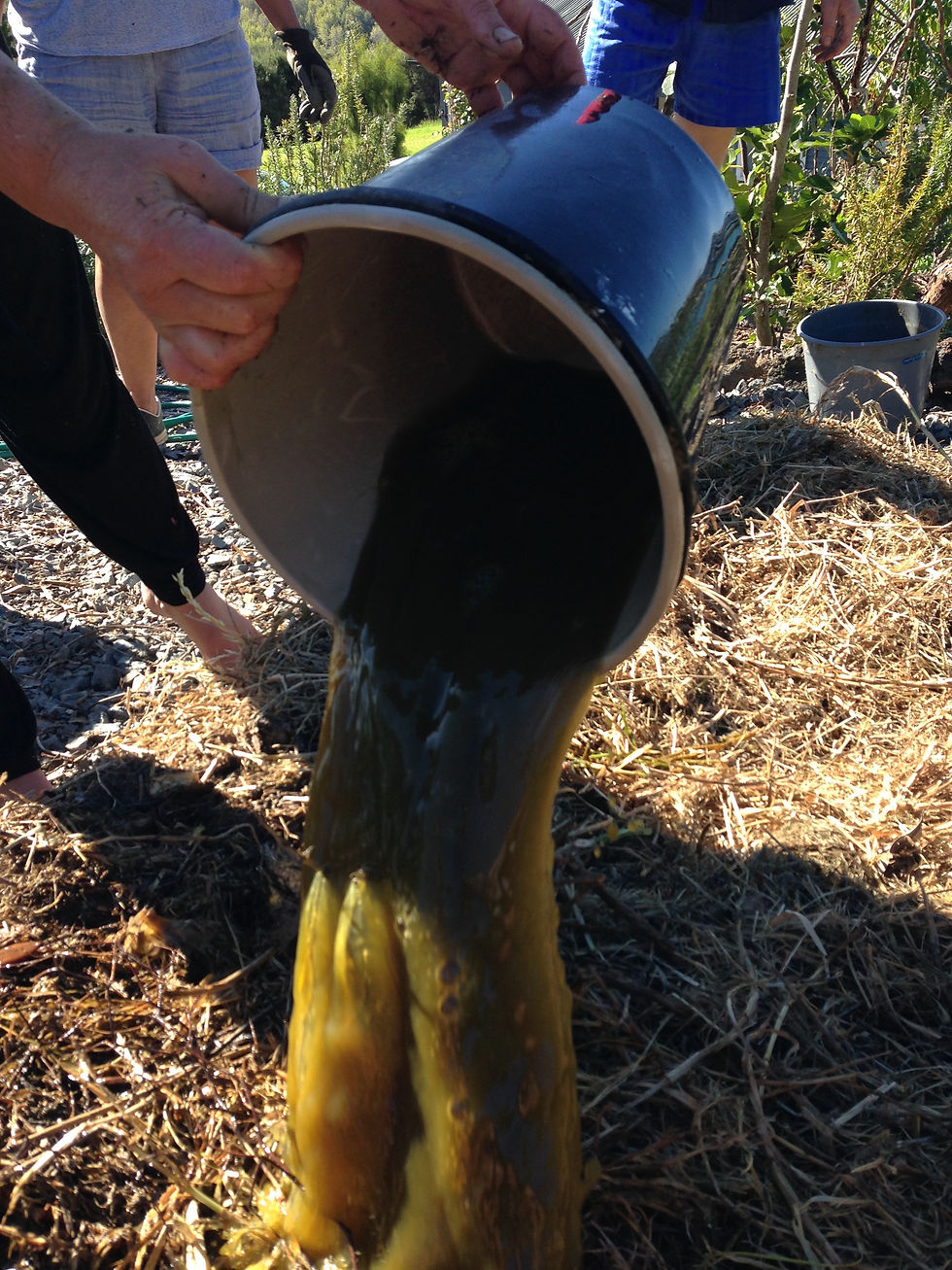
cow poo and water slurry to nitrogen and water fix
then soak the edges with a hose
KEEP THE SHAPE - weave in from the outside so the inside can look after itself
egg shells crushed
ash from the fire
food waste (nitrogen)
dry grass/hay
worm castings
seaweed soak of cow poo slurry
limes (calcium - worms love)
sulphur - ground aquatic creatures
sand - silica
grass clippings
poo slurry
seaweed soaked in cow poo slurry
limes (2-3 handfulls)
dry grass soaked in cow poo slurry
food waste - chop up big bits
seaweed in cow poo slurry
chopped up green matter (we used pulled out weeds like calla lilies)
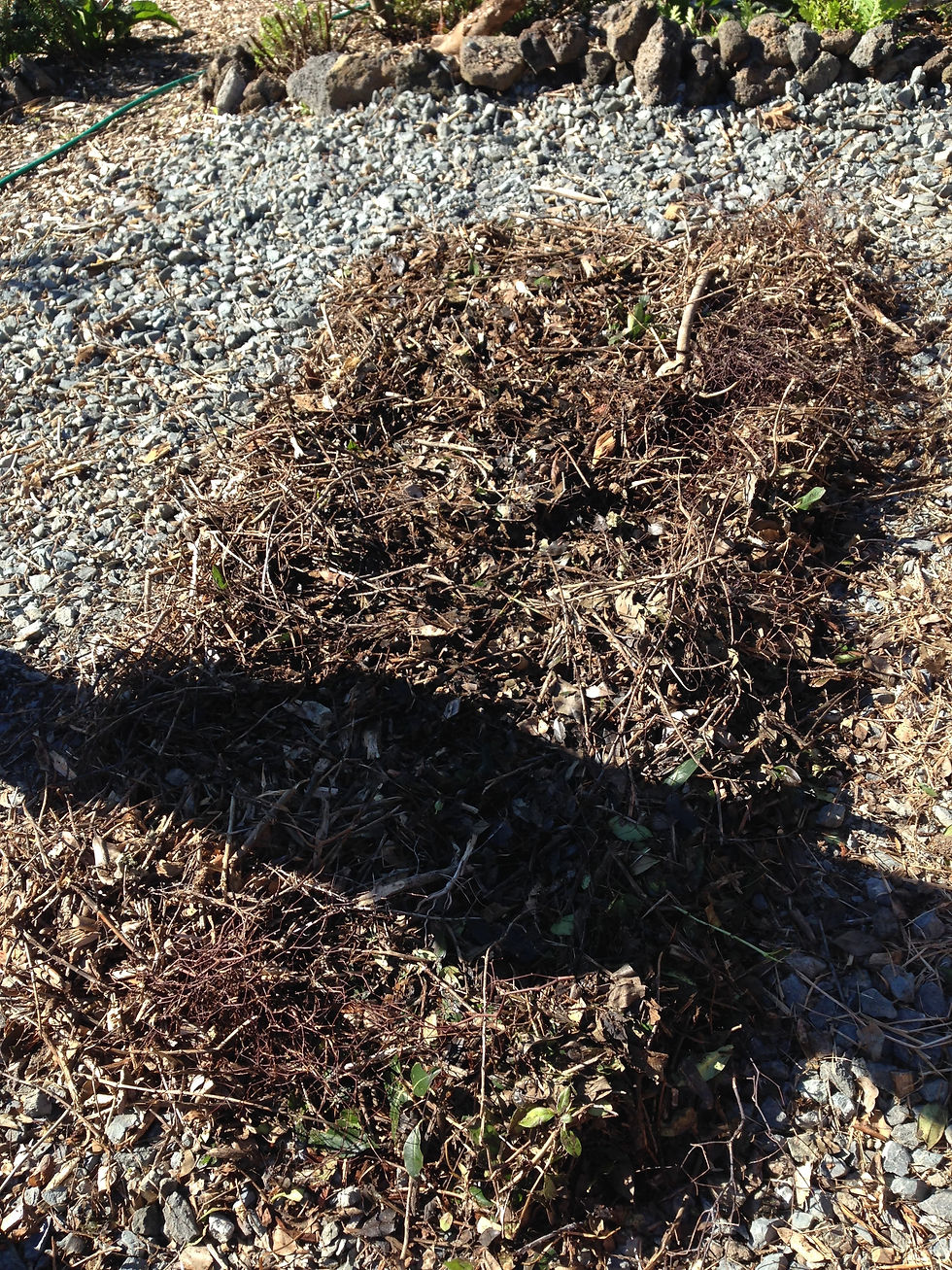
last layer hay, other dried grass or mulch to cover.
Once the compost heap has been made make five truffle sized balls with the best soil you can find from your property. Press a dent into each of the balls, then each ball will have a small pinch of a different preparation (502-506) inserted into them and closed up. With a broom stick you then push a tunnel into the top of the heap, as well as one into each side, one preparation ball gets pushed arms length into the compost heap in each of the tunnels made.
Then, in a bucket, put a small splash of 507 (valerian) then dilute it with about half a bucket of water. Vortex for 20mins. splash all of this over the compost heap to give it a warm sheath.
Cover with hessian sacks and tarp, leave for at least six months, then turn it, opening it up so the outside goes to the middle and the middle goes to the outside. This turning process will input oxygen and re-start the fire.
Comments